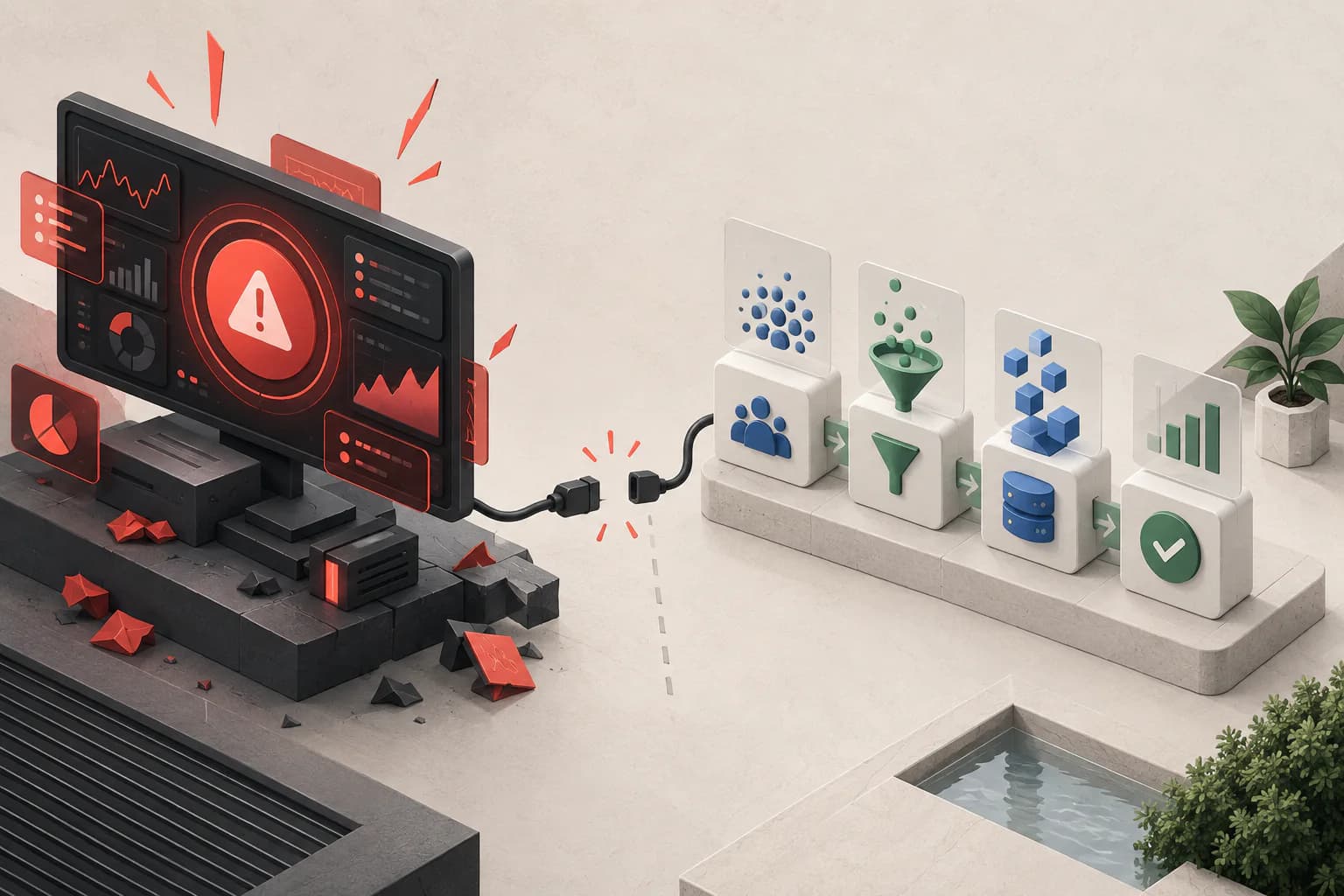
The worst time to edit a working analytics implementation is five minutes after GA4 Realtime panics you. A sudden collapse in active visitors feels like proof that traffic disappeared or tracking broke. The panel cannot tell you which one happened.
Realtime is useful because it is immediate. That same immediacy gives an unstable number too much authority. Its proper job is to trigger an investigation, not to decide what the incident is.
Separate the audience from the panel
A falling live count can describe several different failures: fewer visitors, a collection problem, a segment-specific gap, or a reporting-layer error. The number alone compresses those possibilities into one alarming shape.
When events and advertising activity still look normal while Realtime collapses, actual traffic loss becomes less likely. Directly observed visits that the panel does not show point to the same decision: verify the reporting layer before touching collection. That pattern still does not establish a platform-wide outage.
That distinction is enough to change the response. Before touching a tag, find a second signal that lives closer to the thing you are trying to verify.
Verify collection before repairing it
DebugView can answer a narrower question than Realtime: are events still reaching a collection-level surface? Infrastructure logs, application telemetry, order activity, or another direct operational signal can answer whether real traffic and business events continue.
Use those checks in order:
- Confirm that the site or application is serving real activity.
- Check whether expected events still appear in a collection-level view.
- Compare the timing and affected segments rather than trusting the headline audience number.
- Leave a previously working implementation unchanged until the collection path fails a reproducible test.
- Reconcile later reporting before declaring the traffic permanently lost.
If events continue to arrive while Realtime falls, changing tags can create a genuine tracking defect on top of a temporary reporting problem. Restraint is part of incident response.
Keep Realtime, but give it a smaller job
The panel remains useful for spotting unusual movement. A sharp spike can prompt a traffic review; a sudden drop can prompt a collection check. It is fast, accessible, and already part of many marketing workflows.
It becomes dangerous when a business also expects it to monitor server pressure, minute-by-minute audience availability, or the health of revenue-critical tracking without confirmation. Those jobs deserve direct operational signals. Realtime can point toward the investigation, but it should not be the only instrument capable of declaring success or failure.
A separate first-party tracking surface may be appropriate where dependable live awareness matters. That is an architectural decision, not something Realtime's bad day can settle. The stronger rule is simply that a critical alert should not depend on one third-party panel.
Write the incident rule before the next incident
Decide in advance what evidence permits a tag change. A Realtime drop should be the alert. A missing collection event, reproduced across a defined journey, should be the trigger for implementation work. Traffic or infrastructure evidence should decide whether the business itself is affected.
Write the trigger threshold into the incident runbook now, before the next drop tempts someone to change a working tag.